How to Spot Valuable Wheat Pennies Straightforwardly
Wheat pennies look similar at a glance. The difference between a pocket-change coin and a four-figure rare Lincoln wheat penny usually appears in the first 30 seconds of inspection. A straightforward approach keeps emotion out and value in focus.
Step One: Date and Mint Mark First
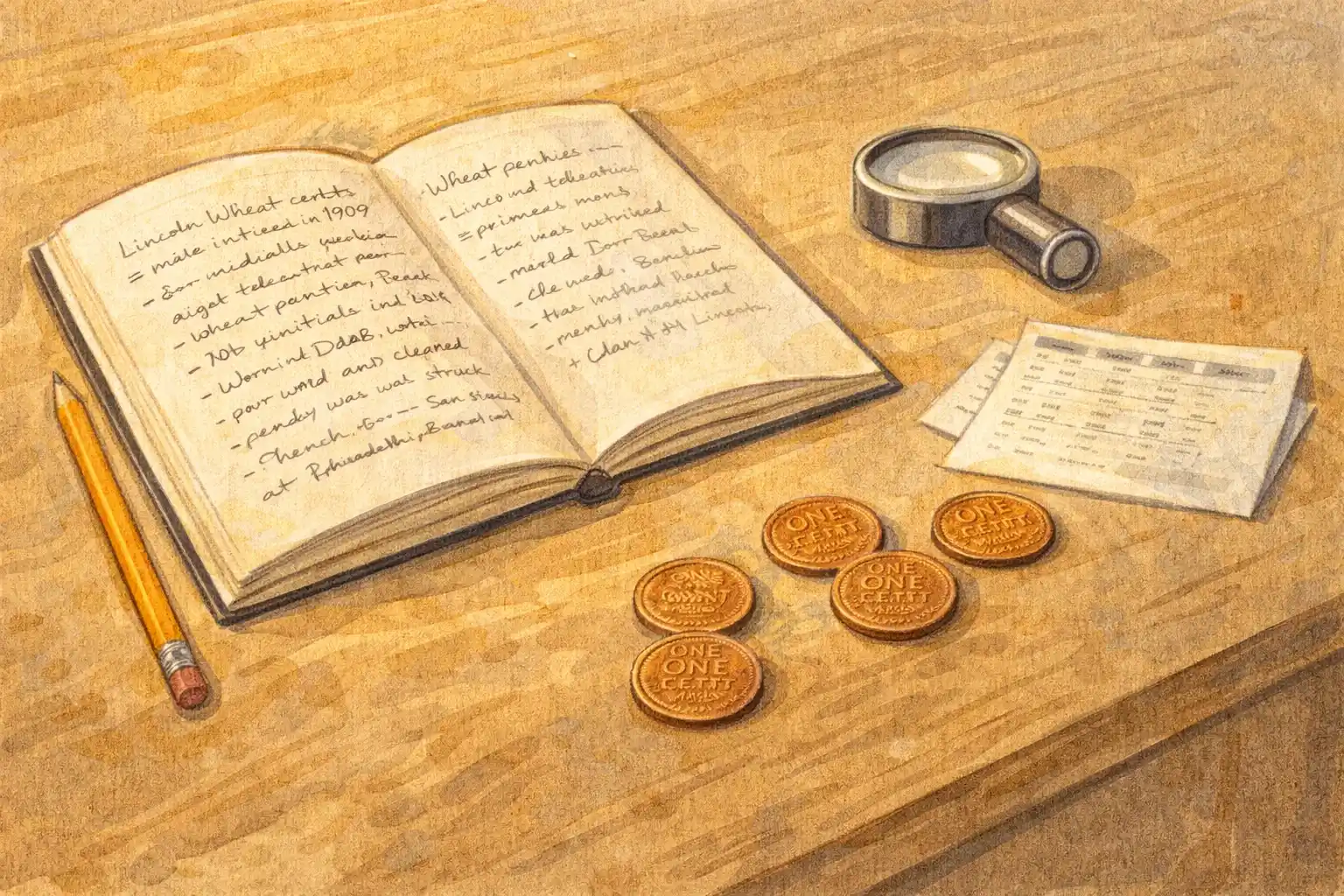
Always begin with the date and mint mark. This single check through the coin scanner app removes most non-candidates immediately.
Key dates to recognize on sight:
1909-S VDB — the classic starter key
1914-D — low mintage, heavy demand
1922 Plain (No D) — mint mark absence matters
1931-S — scarce even in lower grades
Mint marks sit below the date on the obverse:
D (Denver) and S (San Francisco) usually carry more upside
No mint mark coins are often Philadelphia issues and commonly produced
If the coin is a 1940s or 1950s Philadelphia wheat, expectations should stay modest unless condition is exceptional.
Why Date Alone Is Not Enough
Two wheat pennies from the same year can differ in value by hundreds of dollars. Grade decides that gap.
Examples:
A worn 1914-D still commands strong prices
A worn 1946-P stays near face value
A sharply struck 1958-D in MS65 Red can outperform many older dates
Age attracts attention. Condition creates value.
Step Two: Quick Condition Screening
Before magnification, use a coin scanner and simple visual cues:
Are wheat lines on the reverse distinct or flat?
Does Lincoln’s jawline look sharp or blurred?
Is the surface even in color, not blotchy or overly bright?
Heavily worn coins fall into Good or lower grades. These matter only if the date is truly scarce.
Color Matters More Than Beginners Expect
Copper color affects value dramatically:
Red (RD) coins retain original mint luster
Red-Brown (RB) show partial toning
Brown (BN) dominate circulation finds
A Red wheat penny can sell for 5–10× the price of the same coin in Brown. Bright color alone does not guarantee originality, but dull brown limits upside immediately.
Step Three: Eliminate Obvious Non-Candidates
Remove coins with:
Bent rims
Heavy corrosion
Scratches across fields
Artificial shine
These flaws rarely recover value, even on better dates.
Spotting valuable wheat pennies starts with discipline, not luck. Date and mint mark narrow the field. Condition and color decide potential. Most coins fail quickly—and that’s the point.
Step Four: Judge Condition With Simple Signals
Once a wheat penny passes the date and mint test, the next step is confirming quality and originality. This stage separates solid finds from expensive mistakes.
You do not need advanced grading skills to make good decisions. Focus on a few repeatable markers.
On the obverse:
Lincoln’s cheek and jawline should show clear shape
Hair details above the ear should not melt into the field
Letters in LIBERTY should remain complete
On the reverse:
Wheat stalks should show individual lines, not smooth blobs
The words ONE CENT should appear sharp
Coins that still show strong detail under normal light deserve closer attention.
Spotting Cleaning and Surface Problems Early
Cleaned wheat pennies are common. Many look attractive until magnified.
Red flags include:
Fine parallel hairlines, often around Lincoln’s face
A bright, unnatural orange tone
Dark residue along letters or edges
Original coins age unevenly. Artificial shine looks uniform and flat. When in doubt, pass. There will always be another coin.
Step Five: Confirm Metal and Weight
Composition errors and fakes fail basic tests.
Quick checks:
Pre-1982 copper cents weigh about 3.11 g
1943 steel cents are magnetic
Bronze 1943 cents are non-magnetic and extremely rare
Any 1943 coin that looks copper deserves careful weighing and professional review. Most are altered steel cents, but the real ones are life-changing.
Step Six: Identify Valuable Varieties and Errors
Errors add value only when they are clear and documented.
Key examples:
1955 Doubled Die Obverse
Thick doubling on date and motto. Easy to see without magnification in many cases.Doubled dies on dates like 1917 or 1944
Wrong-metal errors, such as 1943 bronze or 1944 steel
Minor die cracks or chips usually add modest premiums. Major doubled dies create exponential jumps.
Using Light Correctly
Tilt the coin under a single light source:
Doubling appears as raised, secondary images
Machine doubling looks flat and shelf-like
True doubled dies have rounded contours. Flat doubling does not qualify.
Digital Confirmation Without Guesswork
When a coin looks promising, fast verification helps. Tools like Coin ID Scanner allow you to photograph the coin and instantly see coin cards with year, composition, weight, diameter, and typical pricing. This helps flag key dates or eliminate commons before deeper research.
Value appears when condition, originality, and variety align. Ignore shine. Trust weight, detail, and repeatable diagnostics.
A Simple Checklist You Can Use Anywhere
By this point, most wheat pennies should already be ruled out. The final step is consistency—using the same checks every time so good coins do not slip through and bad ones do not sneak in.
The Straightforward Wheat Penny Checklist
Use this order. Do not skip steps.
Date and mint mark
Is it a recognized key or a semi-key?
Does the mint mark match known scarce issues?
Overall condition
Strong wheat lines and readable LIBERTY matter
Heavy wear limits value unless the date is rare
Color and surfaces
Natural red or red-brown beats bright, artificial shine
No hairlines, no polishing marks, no odd residue
Metal and weight
Pre-1982 copper around 3.11 g
1943 steel sticks to a magnet
Anything unusual gets isolated for review
Errors and varieties
Clear doubling, not flat machine doubling
Wrong-metal strikes only after weight confirmation
Minor die cracks add interest, not jackpots
If a coin fails any step, stop. Move on.
Applying the Method in Real Situations
Inherited jars:
Most coins will be common. Sort by decade first. Pull anything pre-1935, then check mint marks.
Coin shops and shows:
Ignore labels like “old” or “estate find.” Ask for magnification and good lighting. Walk away if rushed.
Online listings:
Demand clear photos of both sides and the edge. Compare weight and color claims against known specs. Be wary of vague descriptions.
When to Verify Digitally
Before buying or setting coins aside, quick confirmation saves time. The freemium Coin ID Scanner app helps here by identifying coins from photos and returning coin cards with year, metal, weight, diameter, and typical prices. It won’t replace professional grading, but it filters out obvious commons and flags coins worth deeper research.
What to Do With Confirmed Finds
High-grade keys or major errors: consider PCGS or NGC certification
Solid but lower-grade keys: store properly and track market prices
Common coins: keep for learning or pass them on
Avoid grading marginal pieces. Fees erase gains quickly.
Spotting valuable wheat pennies is not about luck. It is about repeatable checks, patience, and restraint. Most coins are ordinary. A few are not. When you follow a clear process, those few stand out immediately—and costly mistakes disappear just as fast.