What Makes a Maya Angelou Quarter Actually Valuable?
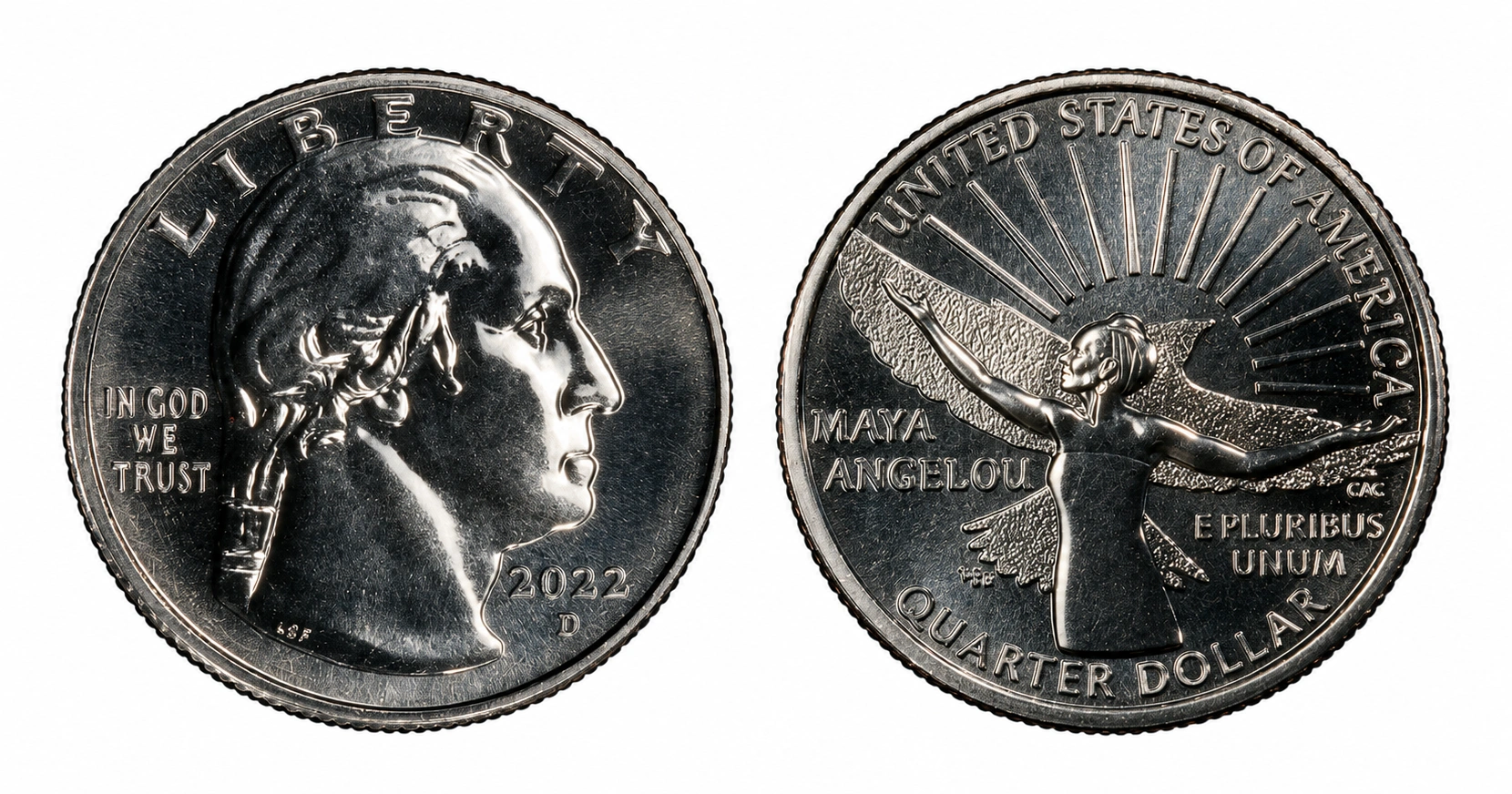
Most examples of this coin remain entirely ordinary, keeping their basic face Maya Angelou Quarter worth.
A few specific versions have started commanding serious attention online.
This coinage issue, representing the celebrated American Women quarters program, marked a significant milestone in modern United States numismatics.
Coin Parameter | Copper-Nickel Clad Version | Silver Version |
Actual weight | 5.67 grams | 6.25 grams |
Outer diameter | 24.26 millimeters | 24.26 millimeters |
Edge thickness | 1.75 millimeters | 1.75 millimeters |
Core metal | Copper 91.67 percent | Silver 99.90 percent |
Cladding metal | Nickel 8.33 percent | None |
Edge design | Reeded | Reeded |
Total production figures show an unequal distribution among the three active United States mint facilities.
The Philadelphia facility struck 237600000 coins.
The Denver facility manufactured 258200000 coins.
The San Francisco mint focused exclusively on collector sets, producing 303520 copper-nickel clad pieces and 338270 silver pieces of exquisite proof quality.
This highly uneven distribution of mintages directly influences the rarity of specific coins on the modern market.
Key Elements Determining High Market Value
Final market value depends on highly specific numismatic factors.
The direct relationship between coin condition and final value follows a clear logical sequence.
Storage in heavy canvas bags → Constant friction between individual coins → Development of surface hairline scratches → Reduction of the coin grade to average levels.
A completely different outcome occurs during controlled roll hunting.
Immediate extraction from a sealed paper roll → Prompt submission to a grading service → Acquisition of a top grade like MS67 or MS68 → Rapid price increase to maximum market levels.
The specific mintmark also establishes a clear hierarchy of value.
Production facility:
Philadelphia
Denver
San Francisco
Coins carrying the S mintmark from San Francisco command higher prices due to their low production numbers.
Mint Errors as the Primary Driver of Value
Inherent production mistakes represent the most profitable area for modern coin buyers.
Each distinct error features specific visual characteristics and unique die origins.
Drooling George Error
This visual anomaly appears on the obverse side of the coin near the profile of George Washington.
An microscopic break on the steel working die near the corner of the mouth causes this effect.
The resulting raised metal deposit closely resembles a drop of saliva.
People can easily spot this mistake with the naked eye under angled lighting.
Price history for the Drooling George error:
2024 value: $15.00
2025 value: $45.00
2026 value: $85.00
Specimens in immaculate condition showing zero signs of circulation trade at much higher levels.
Nesting Bird Error
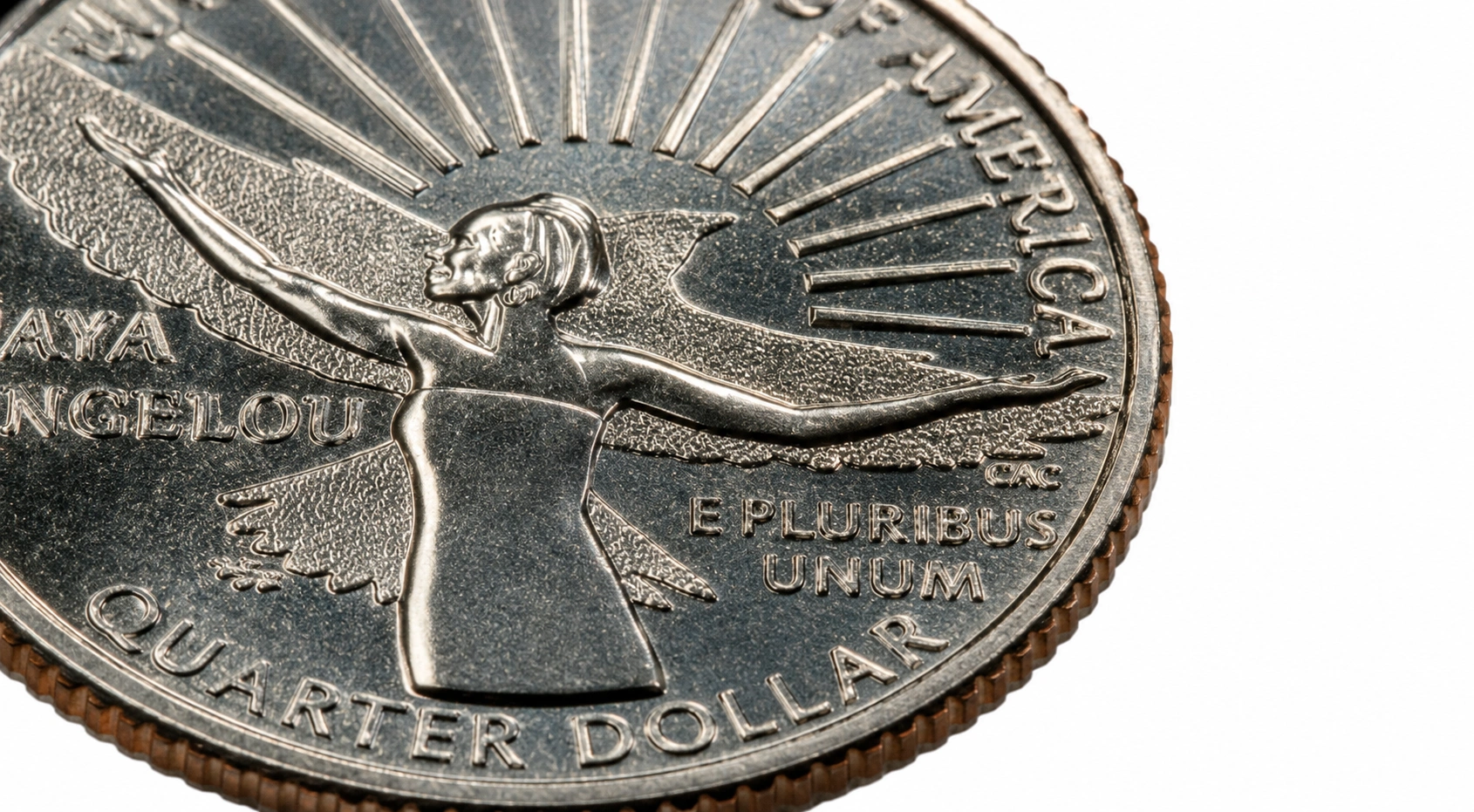
This highly popular error occurs on the reverse side of the coin designed by artist Emily Damstra.
The original design depicts a majestic bird flying with outstretched wings.
A deep die crack near the beak of the bird creates an extra raised line of metal during the striking process.
This excess metal looks like a small twig or a primitive nest.
Price history for the Nesting Bird error:
2024 value: $30.00
2025 value: $75.00
2026 value: $120.00
Individual value depends directly on the physical size of the raised metal flaw.
In Cod We Trust Error
This specific type of mistake falls under the category of grease-filled die errors.
Heavy industrial grease fills the tiny cavity of the letter G in the word GOD on the working die.
The coin press strikes the planchet without transferring the blocked letter.
The surface of the coin displays a modified phrase lacking the traditional letter.
Price history for the In Cod We Trust error:
2024 value: $8.00
2025 value: $18.00
2026 value: $35.00
Complete absence of the letter brings a higher premium than a partial strike.
Die Crack on the Wing Error
Repetitive high-pressure impacts of the coin press eventually damage the hardened steel dies.
Fine raised lines often form along the left wing of the bird on the reverse.
These lines indicate metal flowing into stress fractures on the damaged tool.
The value of these pieces usually remains low in average condition.
Multiple intersecting cracks on a single coin dramatically increase its market appeal.
Price history for the Die Crack on the Wing error:
2024 value: $5.00
2025 value: $12.00
2026 value: $22.00
Coins combining this physical defect with a fully original mint luster bring the highest financial return.
Impact of Preservation Grade on Final Value
Mintmark and Grade | 2024 Value | 2025 Value | 2026 Value |
Philadelphia MS66 | $8.00 | $12.00 | $15.00 |
Philadelphia MS67 | $45.00 | $60.00 | $75.00 |
Philadelphia MS67+ | $1200.00 | $1800.00 | $2375.00 |
Denver MS66 | $6.00 | $9.00 | $12.00 |
Denver MS67 | $35.00 | $50.00 | $65.00 |
Denver MS68 | $800.00 | $1100.00 | $1500.00 |
A unique specimen from the Philadelphia facility holding an MS67+ grade retains the absolute record.
The public sale of this coin at a major auction established the historical price ceiling for this modern issue.
Tiny variations in surface quality create a massive difference in the final realization price.
Professional Grading Process
Independent grading organizations offer official certification confirming authenticity and grade.
This process requires submitting coins to professional third-party grading services.
Key verification steps:
Submission
Free Coin Scanner Evaluation
Encapsulation
Respected companies such as NGC or PCGS perform microscopic examination of every submitted coin.
Numismatic experts verify the metal composition, ruling out fake alterations or artificial scratches.
The certified coin goes into a sonically sealed plastic holder displaying the unique serial number and grade.
Certified coins sell much faster due to the high trust of buyers in the official grade.
The total cost of submission sometimes exceeds the actual value of the coin if the pre-grading estimate was wrong.
Collectors must inspect their coins using a ten-power loupe before sending them to grading companies.
Preservation Rules for Rare Quarters
Improper handling can instantly destroy the numismatic value of a rare coin.
Moisture and oxygen easily react with the metal surface, causing ugly discoloration.
Environmental risks:
Humidity
Skin contact
Friction
Collectors should use inert plastic capsules free of polyvinyl chloride.
One must hold the coin exclusively by its outer edges to prevent fingerprints on the pristine fields.
Harsh chemical cleaning or rubbing with a cloth permanently ruins the original mint luster.
Restoring the damaged surface of a cleaned coin is impossible.
Such careless actions reduce the market value to the basic price of the metal.
Searching for Rare Varieties in Everyday Life
Finding a valuable specimen is possible through diligent checking of pocket change with the free coin appraisal app.
This activity requires a systematic method of reviewing every single quarter.
Search sequence:
Sorting coins by year
Selecting 2022 issues
Identifying the mintmark
Inspecting error locations
Many significant errors were discovered by alert collectors searching through paper rolls from local banks.
Ordering boxes of quarters from bank branches remains an affordable method with excellent potential.
This approach requires minimal capital while offering great opportunities for discovery.